How to Organize Pickup Cricket
Cricket requires the most players of any sport on Rallyd — 11 per side for a full match, up to 22 total. Organizing pickup cricket means solving the numbers problem first. Rallyd's invite link system is built for exactly this: sharing widely, tracking RSVPs, and knowing exactly who's committed.
Who Is This Guide For?
Whether you're organizing weekend tape-ball cricket at the park, formal leather-ball matches at a proper ground, or casual 6-a-side games, this guide helps you coordinate the large groups needed for cricket.
Step-by-Step Walkthrough
Create Your Cricket Event
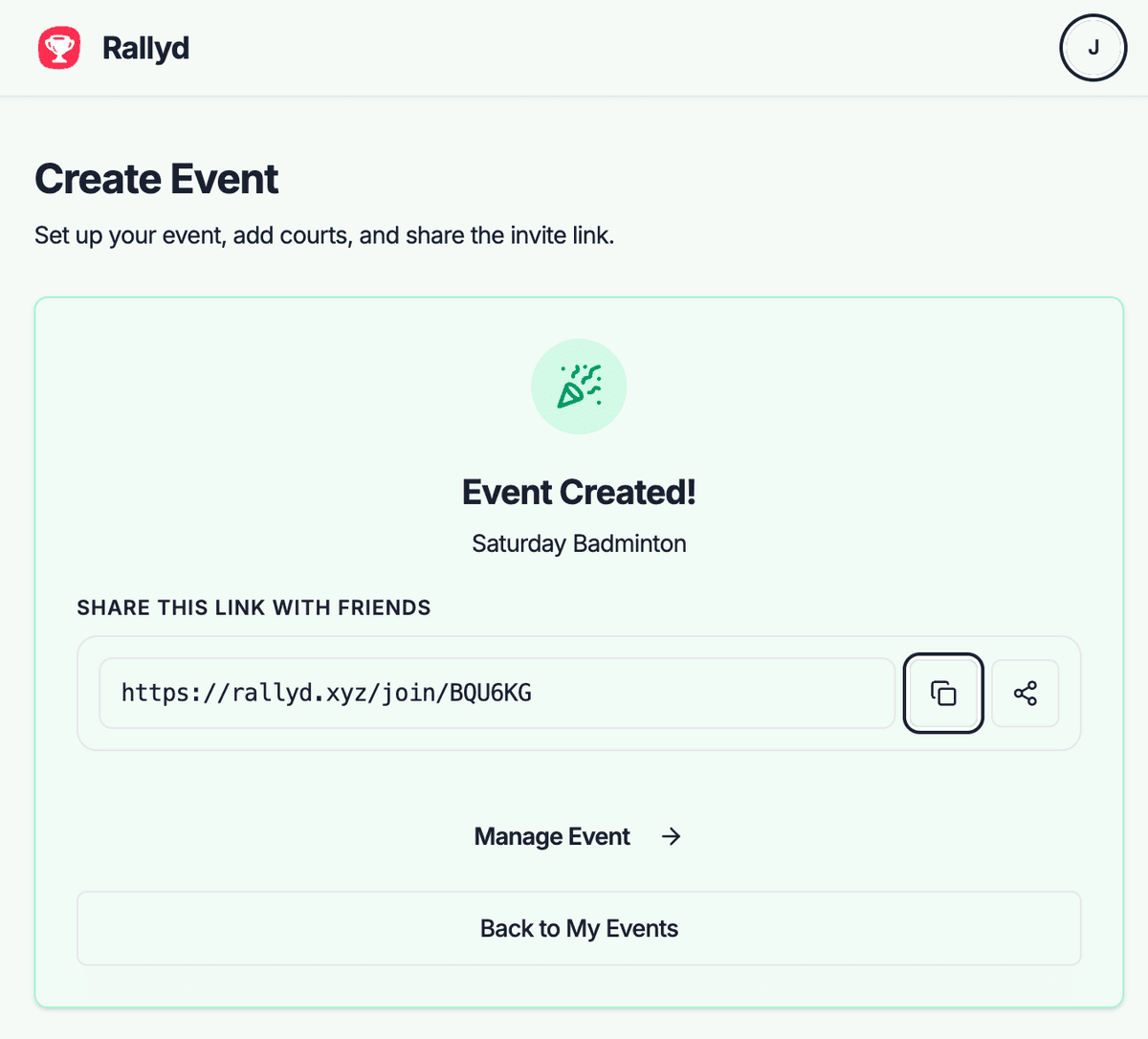
Open Rallyd and select Cricket. Set the date, time, and ground/field location. Specify your format — tape-ball, leather-ball, 6-a-side, or full 11v11. Set capacity for 12–22+ players. Add per-person cost if splitting ground rental or equipment.
Share Your Invite Link
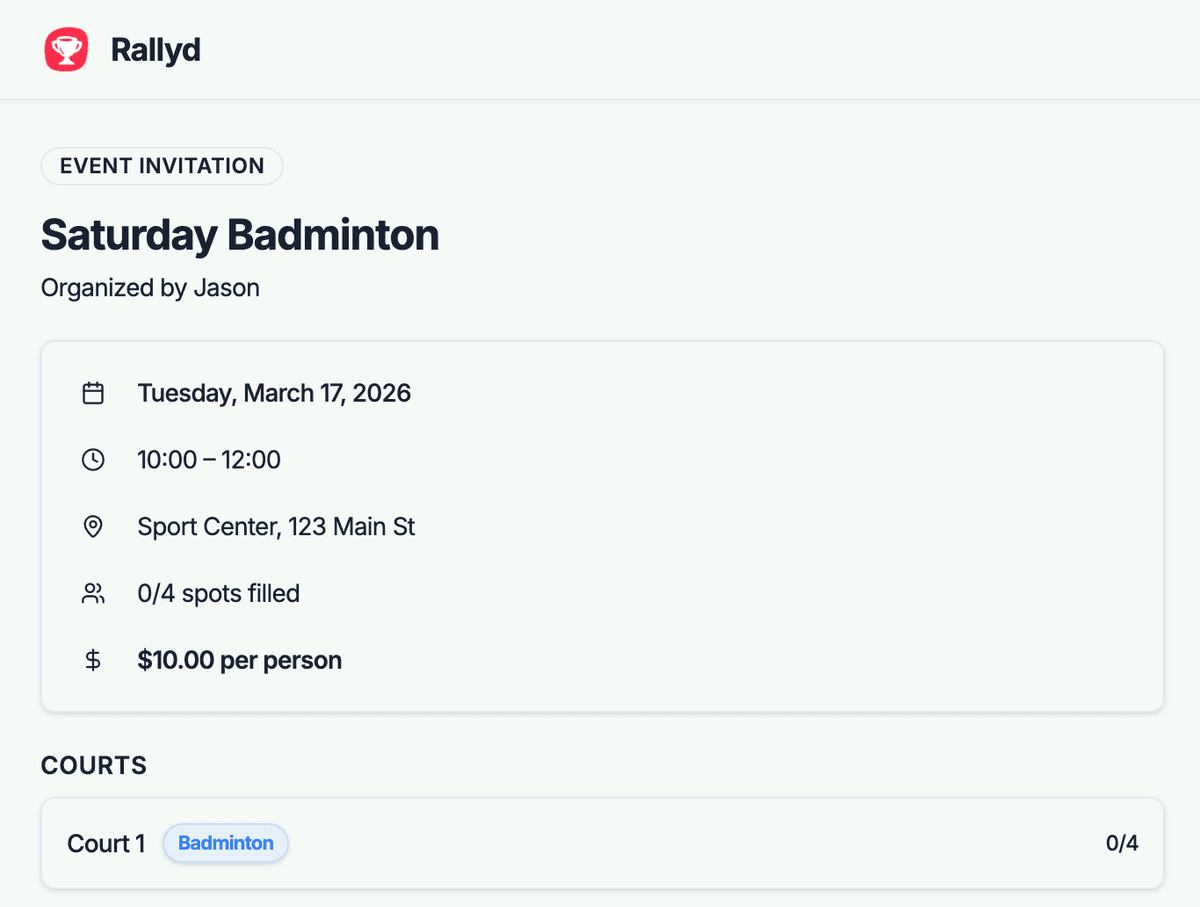
Share the link in cricket group chats, local cricket clubs, South Asian community groups, and park cricket communities. The link shows format, time, and spots remaining.
Players Join the Game
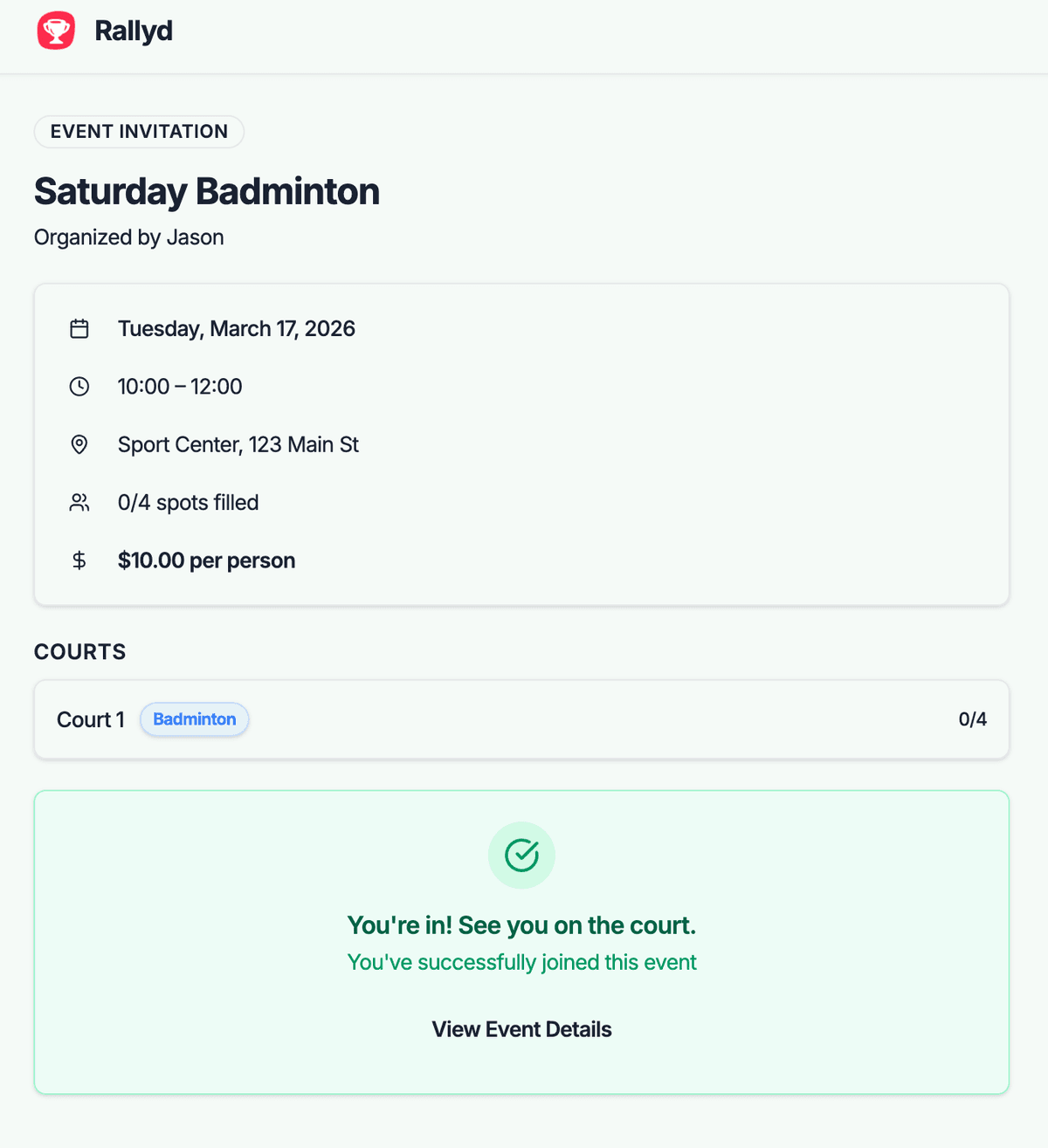
Players tap the link and join. For 11v11, you need 22 committed players — a big number. Start sharing early and cast a wide net.
Manage Teams and Payments
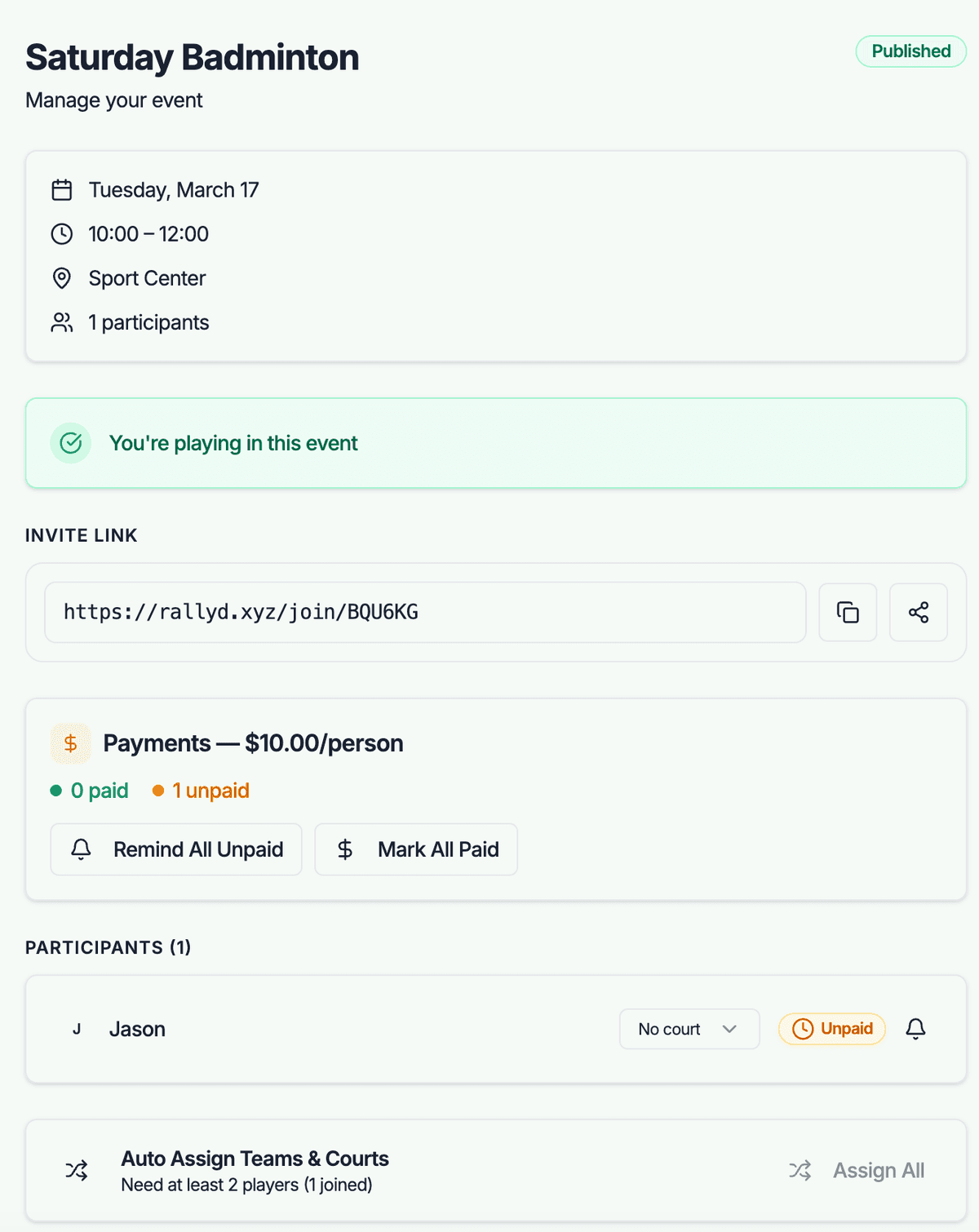
Auto-balance creates two balanced teams. Track ground rental or equipment fees. On match day, use the team list to assign batting order and bowling rotations.
Organizing Tips for Cricket
Start with Tape-Ball for New Groups
Tape-ball cricket needs no pads, helmets, or stumps — just a taped tennis ball, a bat, and something for wickets. It's cheaper, safer, and way more accessible for pickup games.
Limit Overs for Time Management
Play 10–15 over matches instead of full-length games. A 10-over match takes about 90 minutes — perfect for a Sunday morning session without consuming the entire day.
Bring Your Own Bat and Ball
Don't rely on others to bring equipment. As the organizer, have a bat, ball, and makeshift stumps ready. Cones or a backpack work perfectly as wickets for casual play.
Rotate Bowling Fairly
In casual cricket, everyone wants to bowl. Set a max of 2–3 overs per bowler so everyone gets a turn. This also prevents one strong bowler from dominating the entire innings.
Choose the Right Pitch
For tape-ball, any flat grass or concrete strip works. For leather-ball, look for grounds with a proper pitch. Many public parks have cricket nets or prepared strips — scout beforehand.
Common Challenges & Solutions
Getting 22 players committed for a full 11v11
Start with 6-a-side or 8-a-side tape-ball cricket — it's easier to organize and just as fun. As your community grows, scale up to full matches. Share the Rallyd link across multiple cricket groups to maximize your player pool.
Matches take too long and players leave early
Limit to 10–15 overs per side. Set a hard end time in the event description. If time runs out, the team batting second wins by being ahead at the cutoff — this Duckworth-Lewis-lite approach keeps games moving.
Equipment costs are high for leather-ball cricket
For casual play, stick to tape-ball. It costs almost nothing. If your group wants leather-ball, have each player contribute to a shared equipment fund — Rallyd's payment tracking makes this easy to manage.
Frequently Asked Questions
How do I organize pickup cricket games?+
Create a Rallyd event specifying format (tape-ball, leather-ball, or 6-a-side), venue, and player count. Share the invite link in local cricket communities, WhatsApp groups, and at parks where cricket is played. Start with smaller formats if filling 22 spots is difficult.
What's the best cricket format for casual pickup games?+
Tape-ball cricket with 8–12 players and 10-over innings is ideal. It requires minimal equipment, finishes in 90 minutes, and is safe for all skill levels. As your group grows, you can scale up to more structured formats.
Where can I play cricket in the US?+
Public parks with large open fields work well for casual cricket. Some cities have dedicated cricket grounds — check local cricket associations. For tape-ball, any flat area with enough space (50+ yards) works perfectly.
How do I split cricket ground rental costs?+
Set the per-person price when creating your Rallyd event. With 16–22 players splitting a ground rental, individual costs are usually very reasonable. Rallyd tracks who's paid so you can follow up before match day.
Ready to Organize Your First Cricket Game?
Create an event in under a minute, share the invite link, and let Rallyd handle the rest.