How to Organize Pickup Rugby Sevens
Rugby Sevens is fast, physical, and social — 7 players per side on a full-size pitch with 7-minute halves. Organizing pickup rugby means coordinating 14+ players, managing safety expectations, and finding a suitable field. Rallyd simplifies the headcount and logistics.
Who Is This Guide For?
Whether you're a former rugby union player looking for a faster format, a touch rugby organizer wanting to step up, or someone new to rugby who wants a lower-commitment entry point, this guide covers organizing Sevens sessions from signup to kickoff.
Step-by-Step Walkthrough
Create Your Rugby Sevens Event
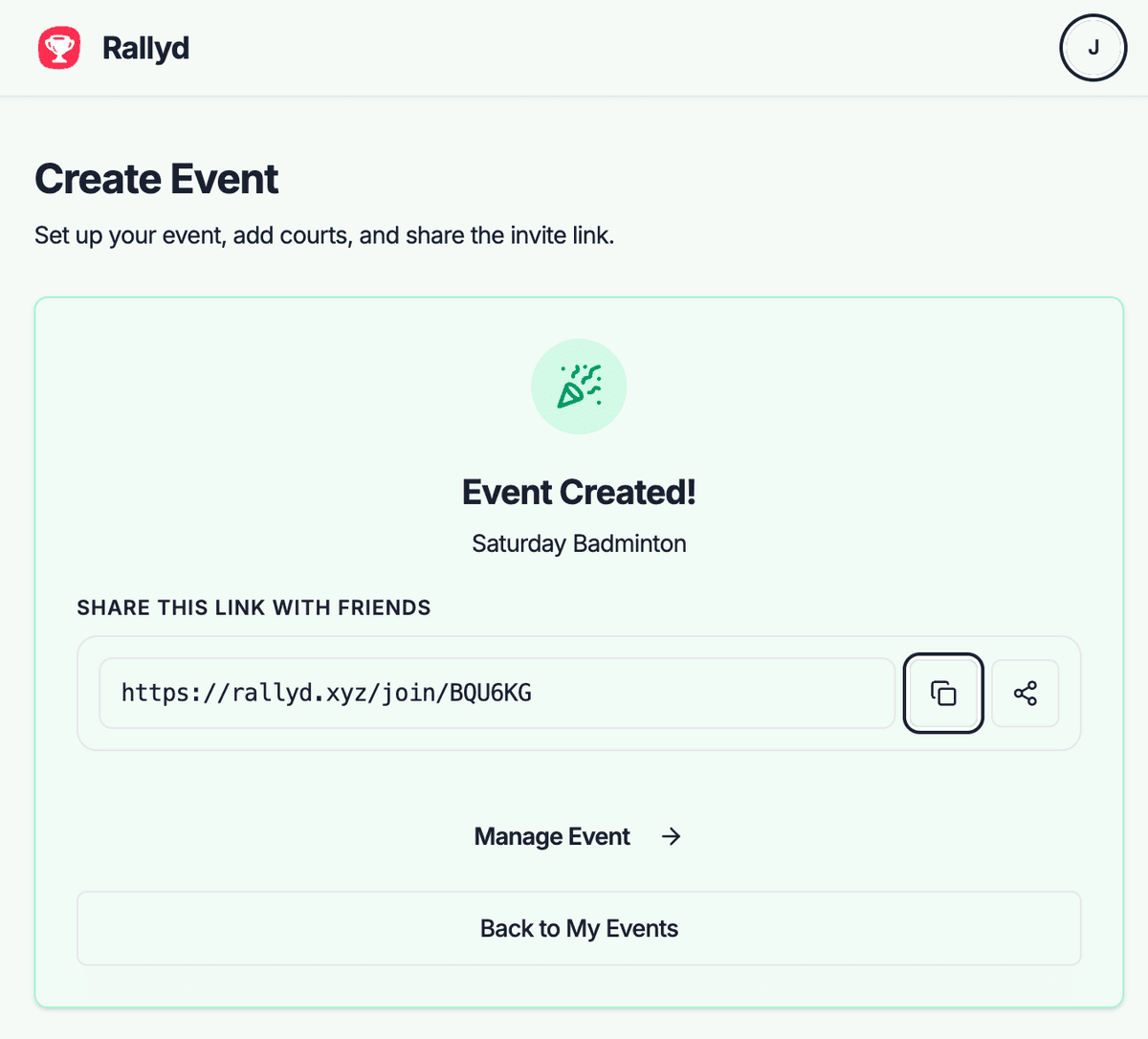
Open Rallyd and choose Rugby Sevens. Set the date, time, and field location — park, rugby club, or sports complex. Specify touch or contact format and set your player cap for 14+ players.
Share Your Invite Link
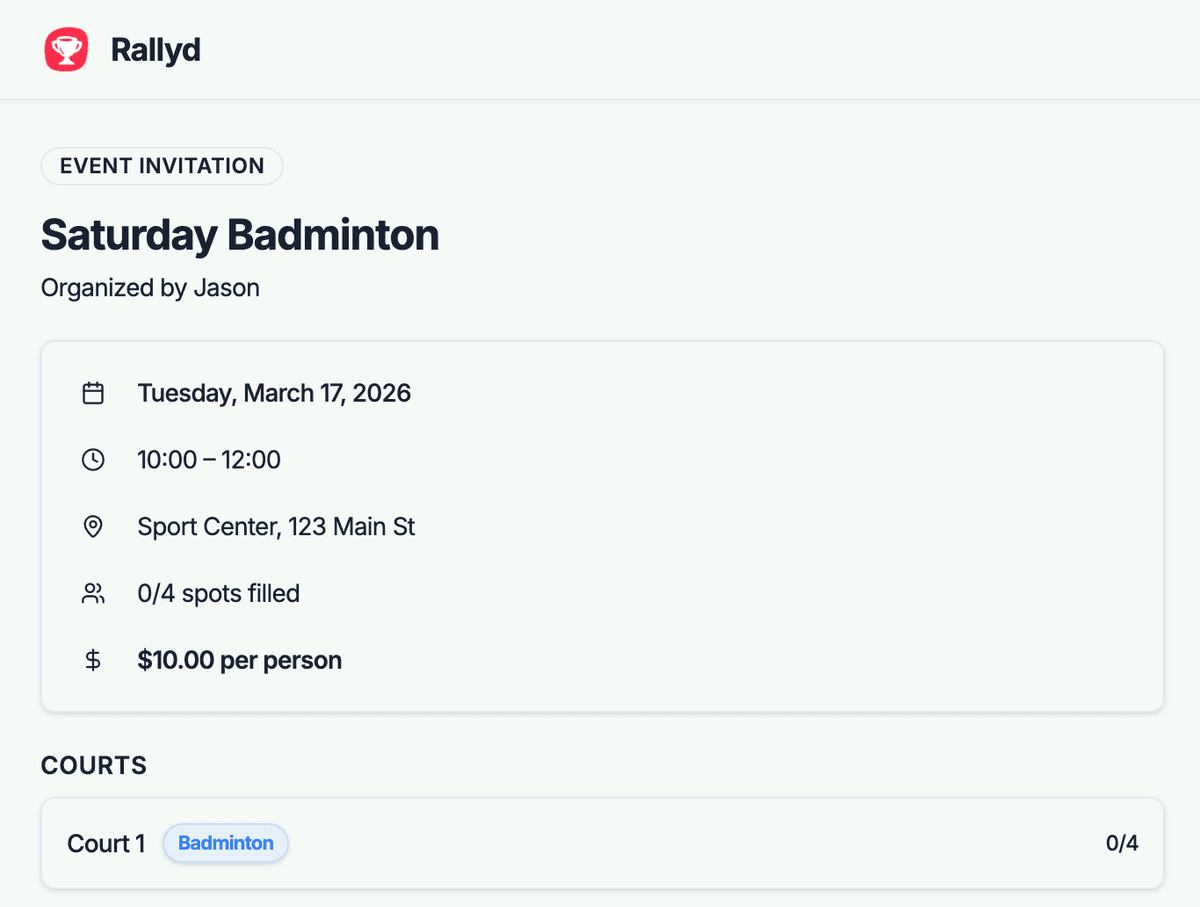
Share your invite link in rugby group chats, local sports communities, and fitness groups. The link shows format (touch vs. contact), time, and spots available.
Players Join the Game
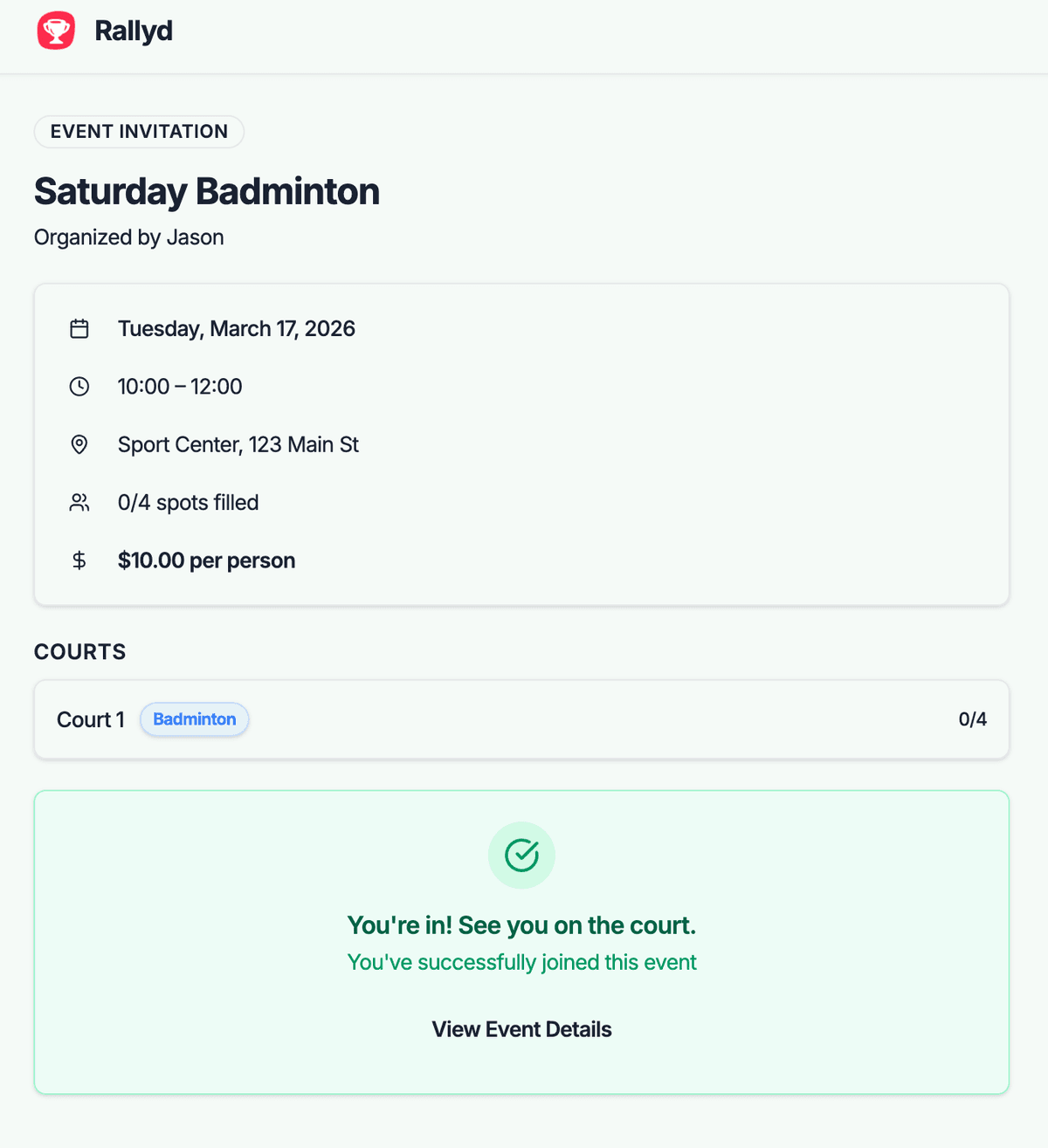
Players tap the link and join. With 14 confirmed players, you have two full teams. Invite 18–20 to account for no-shows.
Manage Teams and Payments
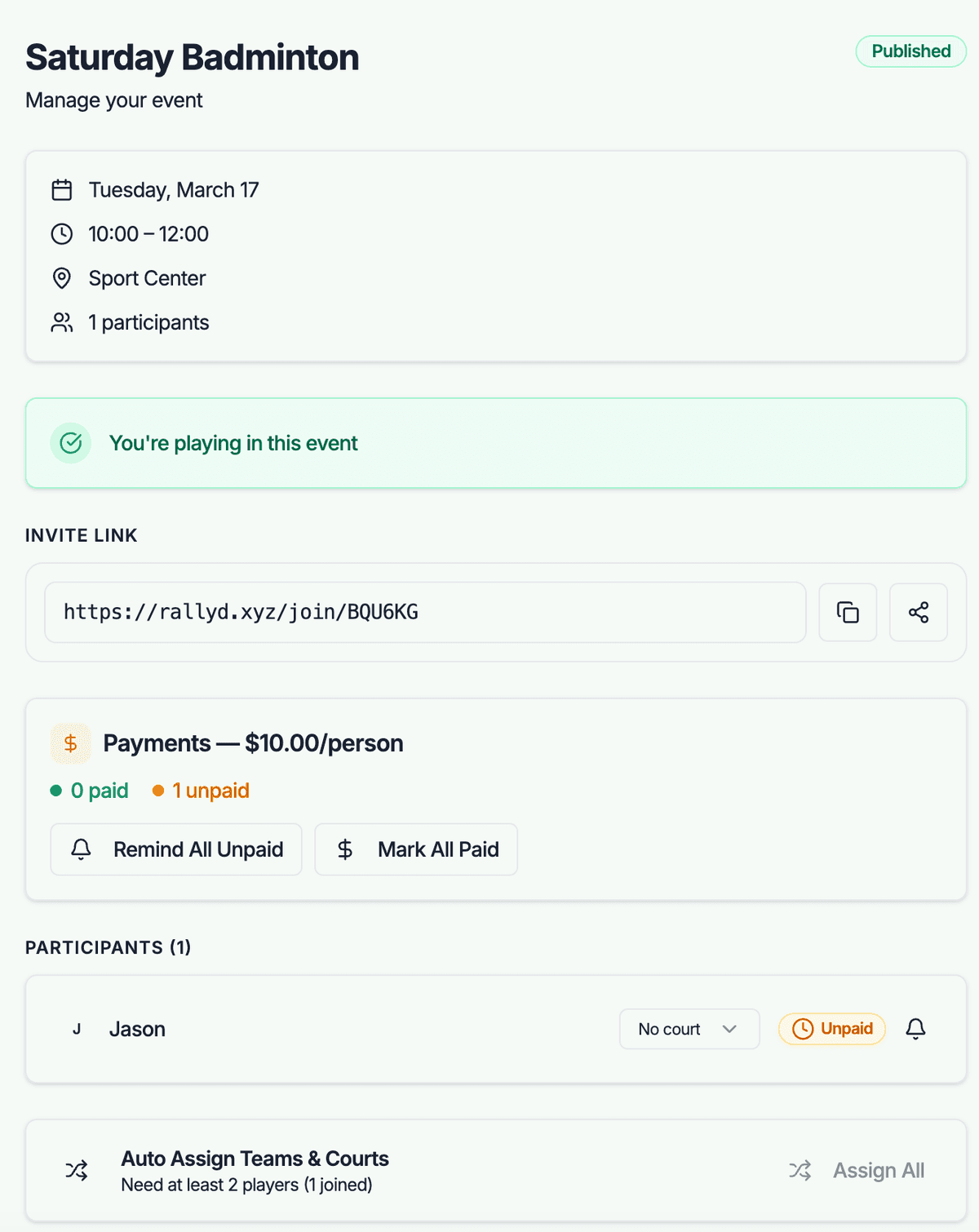
Auto-balance splits players into fair teams. Track any field rental or equipment costs. Confirm teams and positions before arriving at the pitch.
Organizing Tips for Rugby Sevens
Establish Contact Rules Before Kickoff
The #1 issue in casual rugby is undefined contact levels. State clearly whether it's touch, tag, or full contact — and enforce it. Mixed expectations lead to injuries and arguments.
Require Mouthguards for Contact Play
If you're playing any level of contact, mandate mouthguards. Mention this in the event description so players come prepared. A $5 mouthguard prevents $500 dental bills.
Start with Touch for New Groups
Touch rugby sevens is faster, safer, and more inclusive than contact. Start here and only escalate to contact once the group is comfortable and experienced enough.
Bring Cones and a First Aid Kit
Mark the try zone and sidelines with cones. Keep a basic first aid kit (bandages, ice packs, tape) on hand — minor scrapes are inevitable in rugby.
Rotate Positions to Keep It Fun
In Sevens, everyone should experience both forward and back positions. Rotate every few games so nobody is stuck doing a job they don't enjoy.
Common Challenges & Solutions
Getting 14 people to show up at the same time
Invite 20+ players through multiple channels. Sevens works with as few as 10 (5v5) in a pinch — adapt the format to your numbers. Mention in the description that you'll adjust if needed.
Injuries from uncontrolled contact
Be explicit about the contact level in your event. For casual groups, stick to touch or tag rugby. If contact is allowed, pair experienced players who can tackle safely with newcomers who need guidance.
Finding a suitable field with goalposts
You don't need regulation goalposts for casual Sevens — cones work fine for try zones. Public parks, school fields, and recreation centers all work. Look for flat grass fields with enough space for a full pitch.
Frequently Asked Questions
How do I organize pickup rugby sevens?+
Create a Rallyd event specifying touch or contact sevens, set the field and time, and invite 18–20 players. Share the link in rugby communities and athletic groups. With 14+ confirmed players, you're set. Rallyd handles the roster while you focus on team balance.
What's the difference between rugby sevens and rugby union?+
Sevens uses 7 players per side (vs. 15 in union), plays on the same full-size pitch, and has shorter halves (7 minutes). It's faster, more open, and requires less player commitment — perfect for pickup games.
Is rugby sevens safe for beginners?+
Touch rugby sevens is very safe and beginner-friendly — no tackling, just two-hand touch. For contact play, beginners should learn tackling technique before playing full contact. Always specify the format in your Rallyd event.
How do I find rugby players in my area?+
Post your Rallyd invite link at local rugby clubs (many have social players who don't play in the main team), CrossFit gyms, and local sports Facebook groups. Rugby sevens attracts a broader crowd than full XV-a-side.
Ready to Organize Your First Rugby Sevens Game?
Create an event in under a minute, share the invite link, and let Rallyd handle the rest.