How to Organize Pickup Spikeball
Spikeball (roundnet) is portable, fast, and insanely fun — all you need is 4 players and a net you can set up anywhere. The game is growing fast through parks, beaches, and tailgates. Rallyd helps you organize sessions and round-robin tournaments with a single invite link.
Who Is This Guide For?
Whether you're a competitive Spikeball player training for Spikeball Roundnet Association events, a casual backyard player, or someone who just bought a set and wants to learn, this guide helps you organize Spikeball sessions at any skill level.
Step-by-Step Walkthrough
Create Your Spikeball Event
Open Rallyd and choose Spikeball. Set the date, time, and location — any park, beach, or flat outdoor space works. Set capacity for 4 (one match) or 8–12 for a tournament bracket. Spikeball is usually free to play.
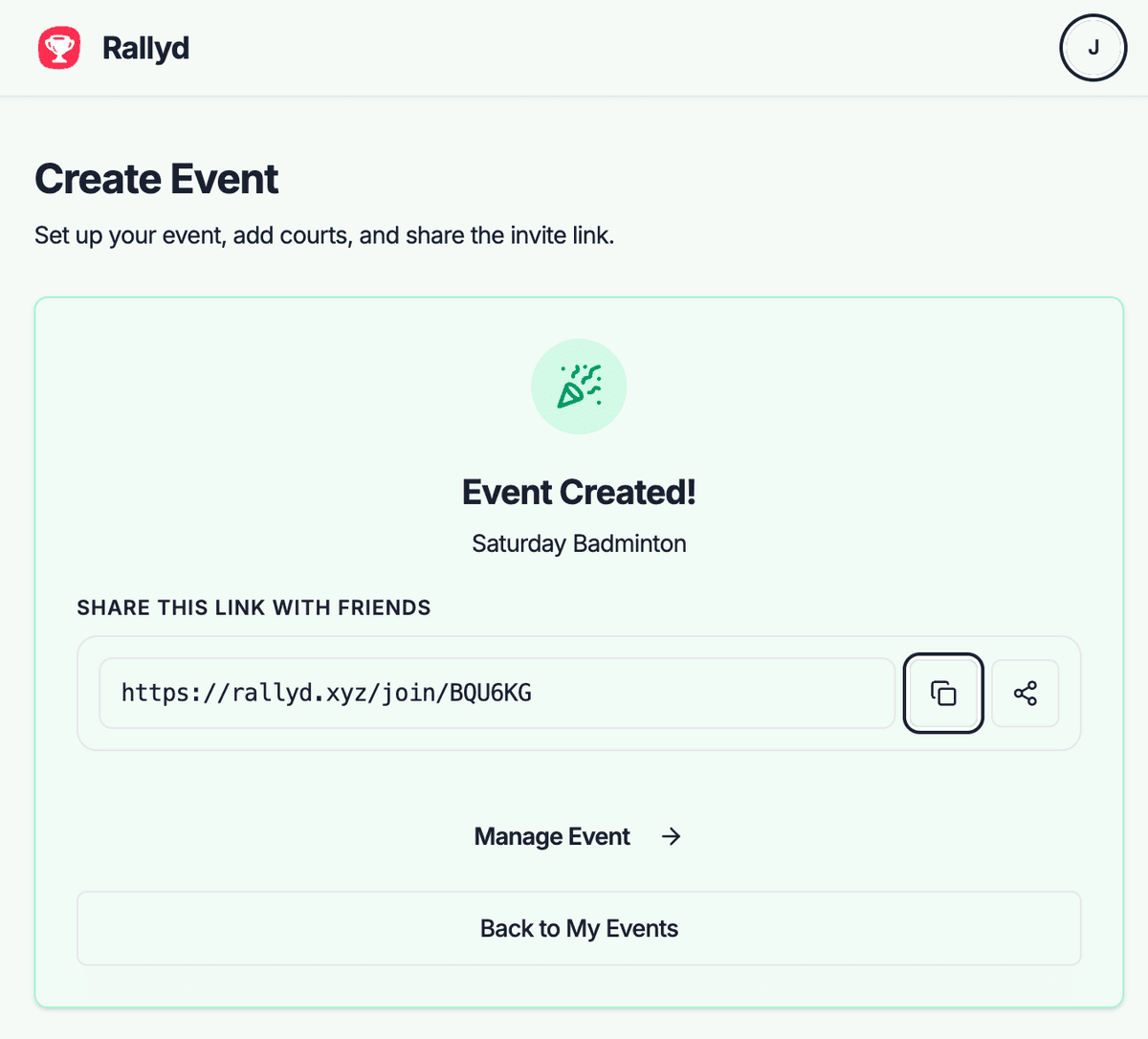
Share Your Invite Link
Share the invite link with friends, post it in Spikeball communities, or drop it in your dorm/office group chat. The link shows the location, format, and spots available.
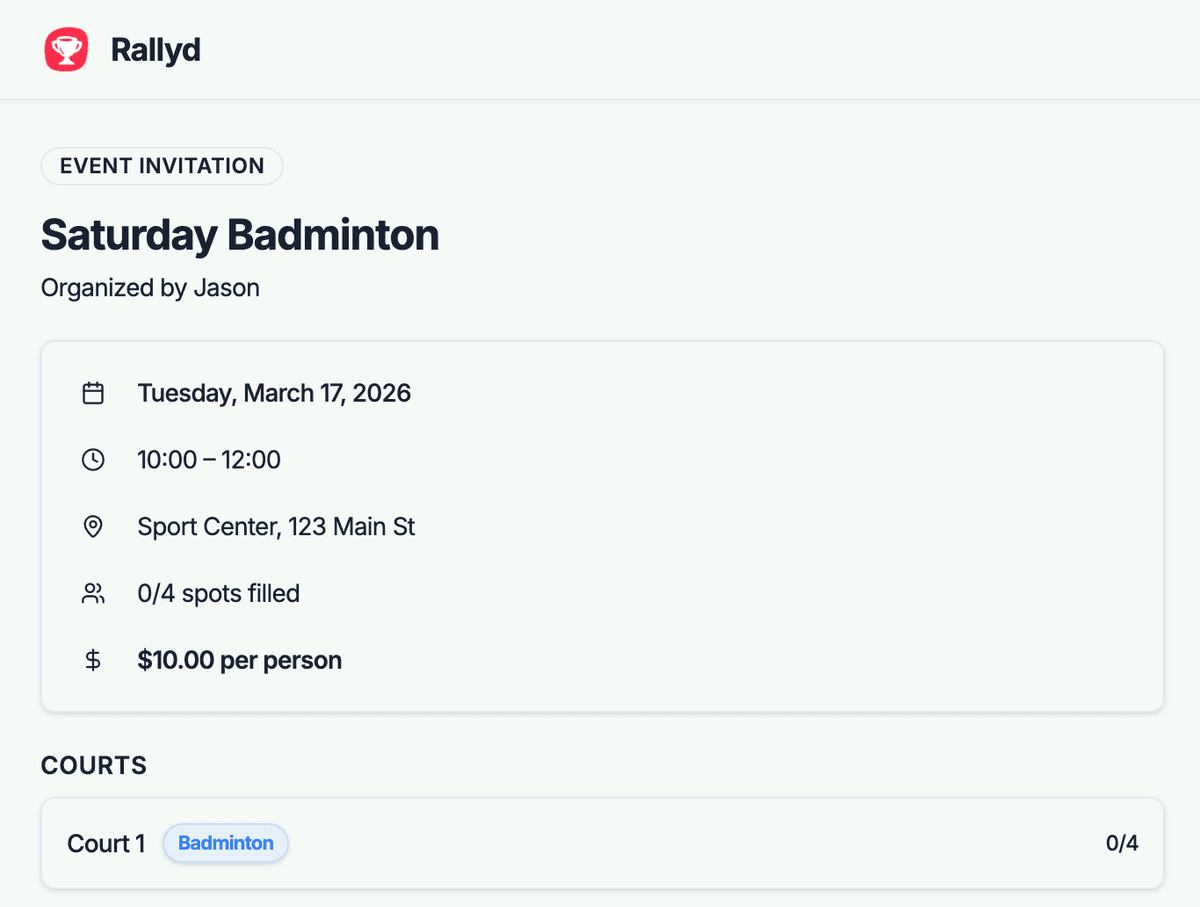
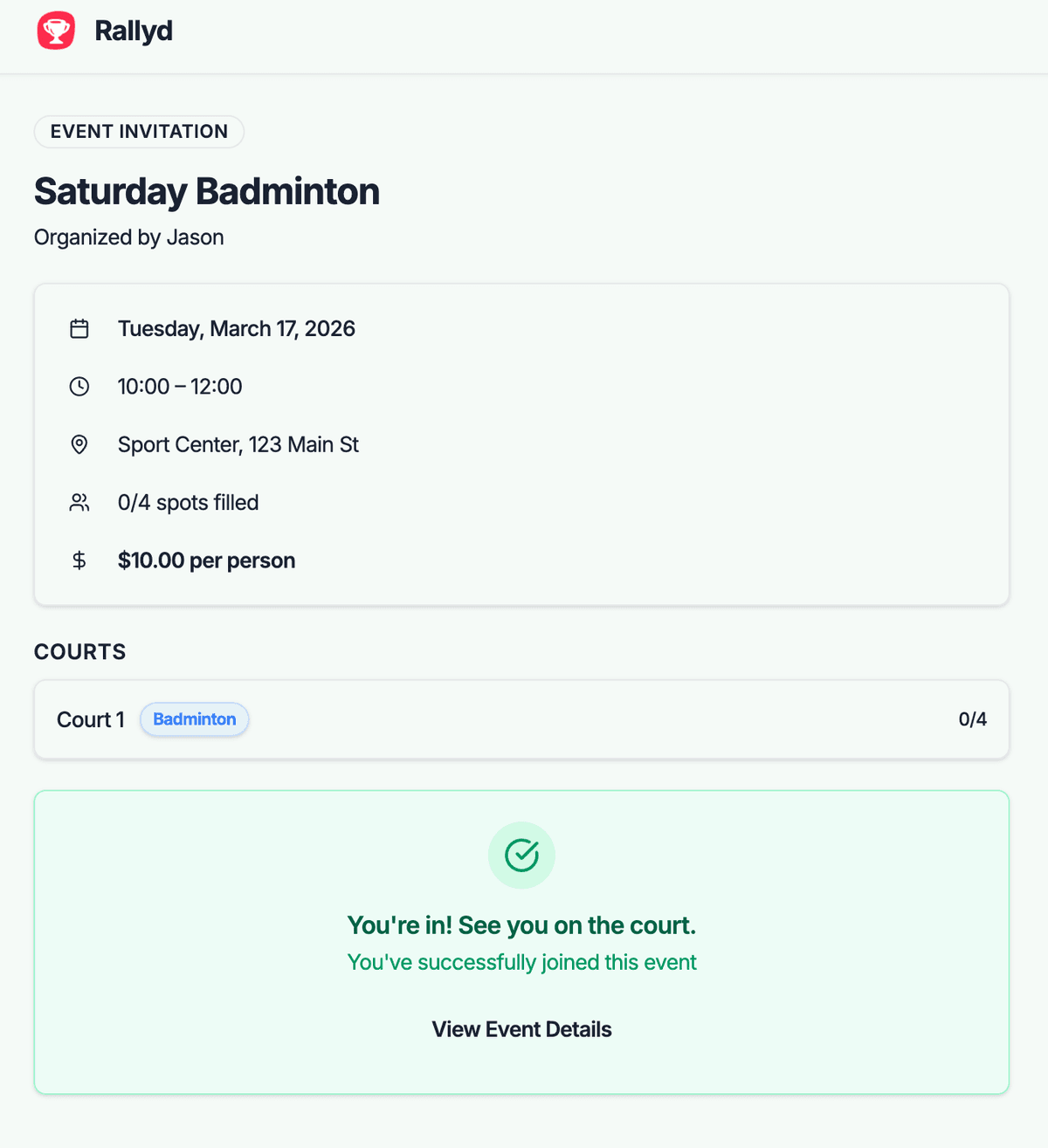
Players Join the Game
Players tap the link and join. With 4 confirmed players, you've got a match. For tournaments, 8+ players creates a proper bracket.
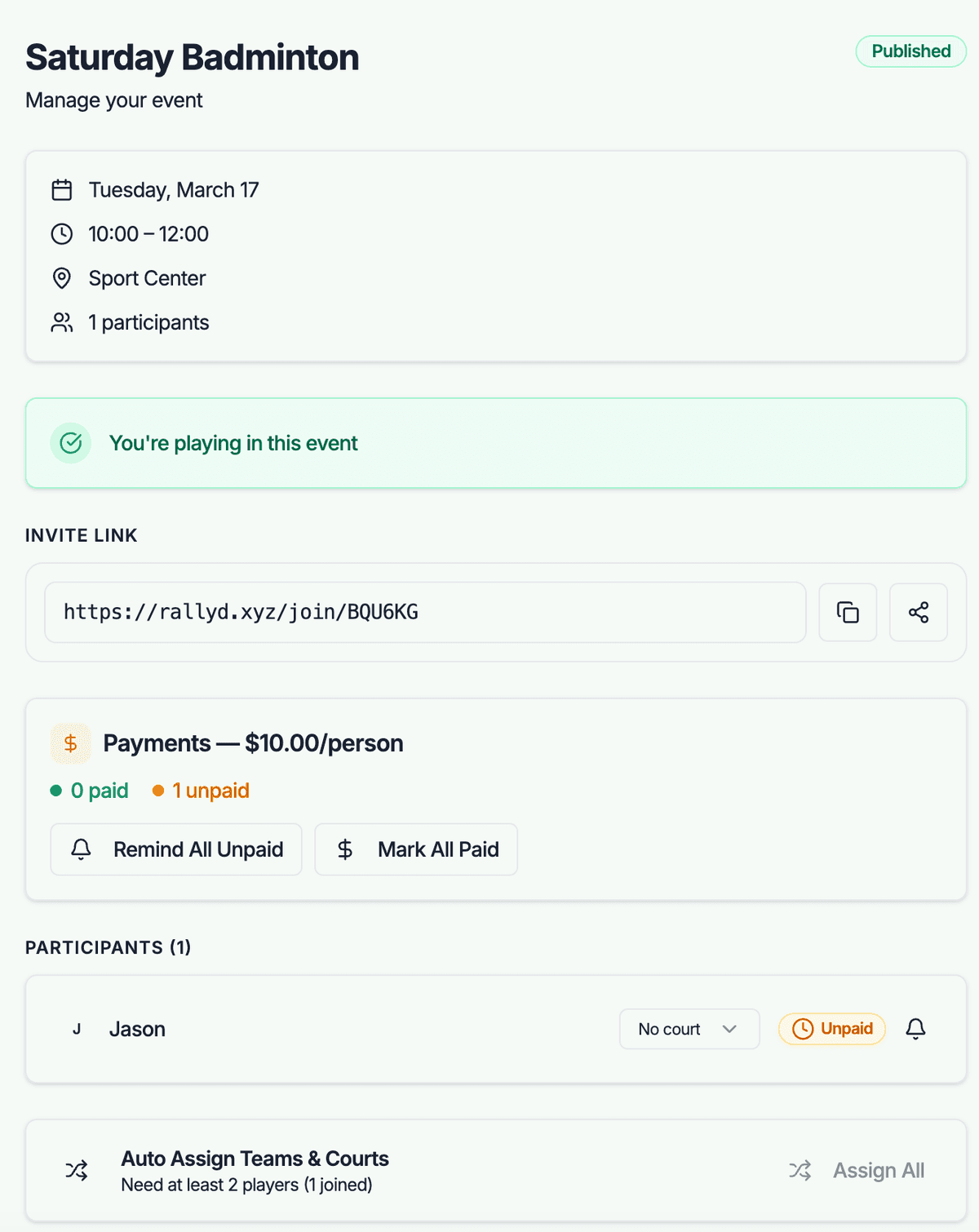
Manage Teams and Bracket
Use auto-balance to randomize partners for tournament play. Track matches and results. Since Spikeball is usually free, payments are rare — but track them if there's a prize pool.
Organizing Tips for Spikeball
Bring a Backup Net and Balls
Spikeball nets lose tension over time and balls crack. Having a spare net and 3–4 extra balls ensures your session isn't cut short by equipment failure.
Choose a Flat, Level Surface
Uneven ground makes Spikeball bounces unpredictable (not in a fun way). Parks with short, flat grass or hard-packed sand are ideal. Avoid slopes.
Teach the Pocket Serve to Beginners
The standard overhand serve is hard for newcomers. Let beginners use the drop-and-hit 'pocket serve' until they're comfortable — it keeps rallies going and builds confidence.
Play to 15 for Competitive Matches
Standard rules are games to 21, win by 2. For casual play or tournaments with many teams, play to 11 or 15 to keep matches moving and reduce wait times.
Set Up Near Shade
Spikeball is usually played outdoors in the sun. Position the net near trees or bring a canopy so waiting players have shade. Hydration matters.
Common Challenges & Solutions
Only one Spikeball net for 8+ players
Ask other players to bring their sets. With 2 nets, you can run simultaneous matches and halve the wait time. Many Spikeball players own a set — just ask in the event description.
Wide skill gaps make matches lopsided
Pair one experienced player with one beginner on each team. Spikeball is a team sport — a good partner makes a huge difference. Random partner assignment keeps things fair over multiple rounds.
Wind makes outdoor play frustrating
Wind above 10 mph significantly affects Spikeball. Check the forecast before scheduling. If it's windy, consider moving to a sheltered area or postponing. Some players bring a weighted base for the net.
Frequently Asked Questions
How do I organize a Spikeball tournament?+
Create a Rallyd event for 8–16 players. Use auto-balance to randomize teams. Run a double-elimination or round-robin bracket — each match takes 10–15 minutes. An 8-player tournament fits comfortably in 90 minutes at a park.
What equipment do I need for a Spikeball event?+
A Spikeball set ($60) includes the net, legs, and balls. Bring 2–3 extra balls as spares. For larger events, having 2 nets lets you run simultaneous matches. That's all you need — Spikeball is extremely portable.
Where is the best place to play Spikeball?+
Any flat outdoor area works — parks, beaches, backyards, campuses. Look for short grass or firm sand without too much slope. Indoors works too if you have a gym or large room with ceiling clearance.
How do I find Spikeball players near me?+
Check the Spikeball Roundnet Association community finder, local sports Facebook groups, and college intramural boards. Create a Rallyd event and share it in these communities — Spikeball players are always looking for organized pickup games.
Ready to Organize Your First Spikeball Game?
Create an event in under a minute, share the invite link, and let Rallyd handle the rest.